Baby Flower Cardigan Free Crochet Pattern for Beginners
Baby Flower Cardigan Free Crochet Pattern
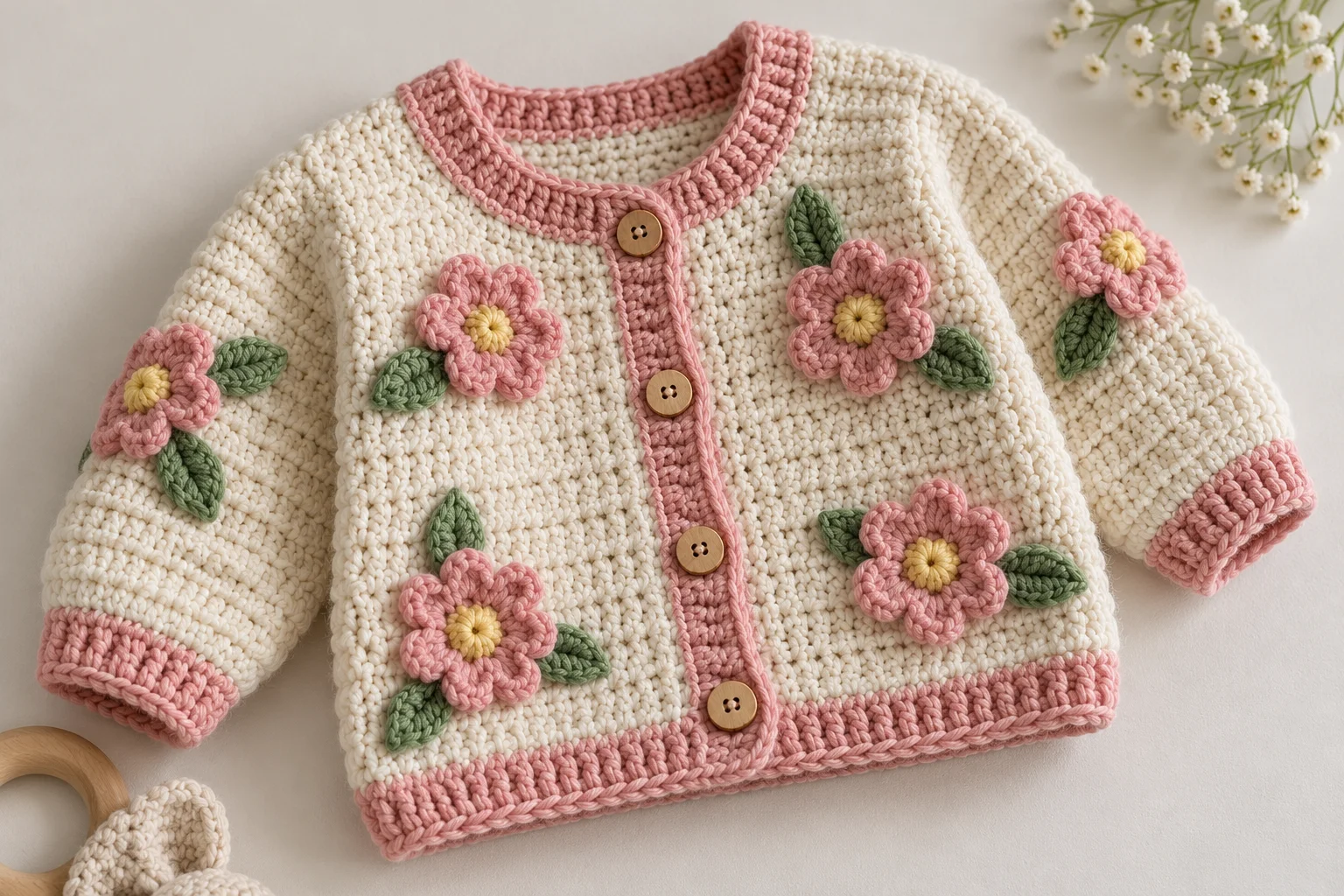
A baby flower cardigan is a sweet and timeless crochet project that combines delicate flowers with the cozy comfort of handmade clothing. With pretty floral details, a classic cardigan shape, and a button-front design, this little sweater makes a thoughtful baby shower gift or a lovely addition to a baby’s wardrobe.
There are many ways to create a floral crochet cardigan. You can use flower granny squares to build the garment, crochet a simple cardigan and decorate it with flower appliqués, or add textured stitches for a more detailed finish. Each method creates a different look, allowing you to choose a style that suits your crochet skills and personal preferences.
In this guide, you’ll discover how to plan a baby flower cardigan, choose suitable materials, understand the basic crochet stitches, and finish your project neatly. Whether you’re making a cardigan for your own baby or creating a handmade gift, careful sizing and thoughtful color choices will help you achieve a beautiful result.
About the Baby Flower Cardigan
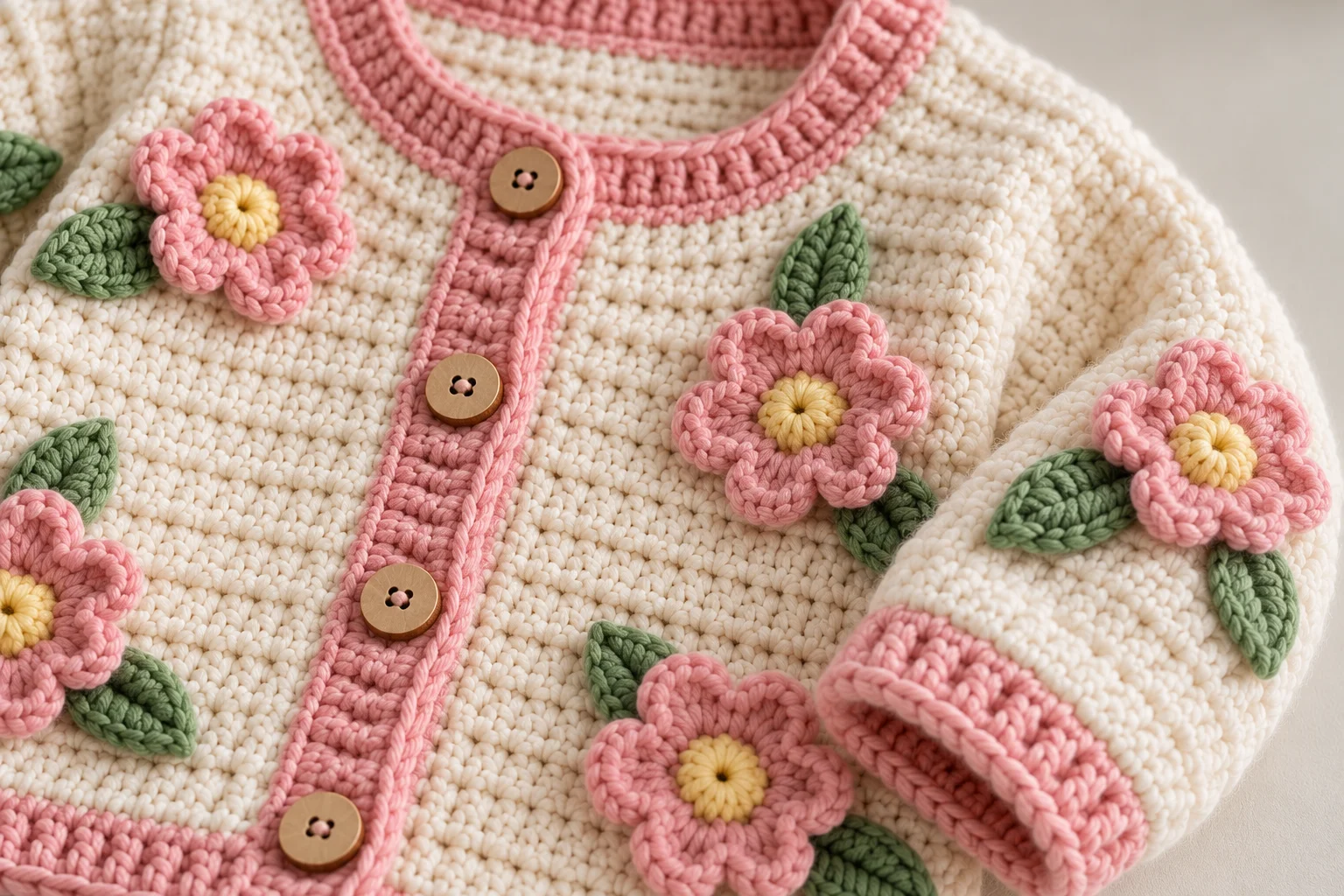
A baby flower cardigan is a crocheted sweater decorated with floral motifs or flower-inspired stitches. Its open-front construction makes it convenient to layer over a baby’s outfit, while the flowers add a delicate decorative touch.
The floral design can be as simple or detailed as you like. Pastel flowers create a soft, traditional appearance, while bright colors give the cardigan a cheerful, playful style.
Project details
- Project type: Baby crochet clothing
- Style: Floral cardigan
- Skill level: Beginner to intermediate, depending on construction
- Construction options: Granny squares, separate garment panels, or a simple cardigan with flower appliqués
- Closure: Optional button-front closure
- Recommended yarn: Soft, washable yarn suitable for baby clothing
- Customization: Flower colors, edging, sleeve length, and decorative details
The exact yarn quantity, hook size, stitch counts, and finished measurements depend on the specific construction method and size selected.
Materials Needed
Before beginning, gather the supplies required for your chosen cardigan design.
1. Yarn
Choose a soft yarn that feels comfortable against delicate skin and can be cared for easily. DK-weight yarn is a popular choice for lightweight crochet baby garments, but always follow the requirements of your selected pattern.
Consider using:
- Cream or white for the main cardigan
- Pink, lavender, or peach for the flowers
- Yellow for flower centers
- Sage green for leaves
- A coordinating shade for the neckline, cuffs, and hem
You can use a single flower color for a classic look or combine several shades for a colorful garden-inspired cardigan.
2. Crochet Hook
Use the hook size recommended by your pattern. The correct hook size helps you achieve the intended fabric texture and garment measurements.
If your stitches are too tight, try a larger hook. If they are too loose, try a smaller hook. Always check your gauge before making the full cardigan.
3. Tapestry Needle
A tapestry needle is useful for joining granny squares, sewing garment pieces together, attaching flower appliqués, and weaving in yarn ends.
4. Scissors
Keep a small pair of sharp scissors nearby for trimming yarn neatly.
5. Stitch Markers
Stitch markers can help you identify sleeve openings, panel edges, and important stitch placements.
6. Buttons
Buttons are optional, depending on the design. Choose suitable buttons that complement the cardigan and can be attached securely.
Crochet Abbreviations
The following abbreviations use standard US crochet terminology.
- ch: Chain
- sl st: Slip stitch
- sc: Single crochet
- hdc: Half double crochet
- dc: Double crochet
- tr: Treble crochet
- st(s): Stitch(es)
- sk: Skip
- rep: Repeat
- inc: Increase
- sp: Space
- yo: Yarn over
Always check the terminology used by your chosen pattern, especially if it was originally written using UK crochet terms.
Gauge
Gauge is important when crocheting clothing because it determines the finished size and fit.
Before beginning the cardigan, make a small swatch using the yarn, hook, and stitch pattern specified by your chosen design. Measure the swatch after allowing it to rest or after washing it according to the yarn care instructions.
If your stitches are larger than the required gauge, try a smaller hook. If your stitches are smaller, try a larger hook.
For a granny-square cardigan, check that the finished squares match the dimensions required by the construction plan.
No universal gauge applies to every baby flower cardigan, so use the measurements provided by the specific pattern you follow.
Choosing the Right Baby Size
Babies grow quickly, and clothing sizes can vary between designs. Rather than relying only on age, compare the cardigan’s finished measurements with the baby’s chest measurement and the desired amount of ease.
Consider these measurements when selecting a size:
- Chest circumference
- Body length
- Sleeve length
- Shoulder width
- Armhole depth
A cardigan should allow comfortable movement without being excessively loose. If you’re making the garment as a gift, choosing a size that the baby can grow into may be practical, provided the garment remains safe and appropriately fitted.
How to Crochet a Baby Flower Cardigan
There are several ways to construct a floral cardigan. The following guide explains the general process for planning, crocheting, and assembling the garment. It is not a stitch-by-stitch pattern, so exact stitch counts and row instructions should come from a complete pattern designed for your chosen size.
Step 1: Choose Your Floral Design
Decide how you want the flowers to appear on the finished cardigan.
Flower granny squares create a patchwork appearance, with each square forming part of the garment. Alternatively, you can crochet a plain cardigan and sew small flowers onto the front panels or sleeves.
For a simple first project, a basic cardigan decorated with flower appliqués can be easier to plan because you don’t need to calculate a complete garment from multiple floral motifs.
Step 2: Prepare Your Yarn Colors
Select your main cardigan color and the shades you want to use for the flowers.
A cream cardigan with pink flowers and yellow centers creates a soft, delicate appearance. Lavender flowers with green leaves give the garment a fresh spring-inspired look. Bright colors can also work beautifully when paired with a neutral background.
Make a small sample of your color combination before beginning the full project. This helps you check that the shades complement one another.
Step 3: Crochet the Main Pieces or Flower Squares
If you’re using a granny-square design, crochet the required floral and plain squares. Keep the tension consistent so the squares are similar in size.
If your cardigan is made from separate panels, follow the selected pattern to crochet the back, front sections, and sleeves.
Count your stitches regularly and compare the measurements with the pattern instructions. Consistent sizing makes the assembly process easier.
Step 4: Arrange the Pieces
Place the crocheted pieces on a flat surface before joining them.
For a granny-square cardigan, arrange the squares according to the intended layout. Check that the flower placement looks balanced and that the front panels mirror one another where necessary.
For a panel-style cardigan, identify the shoulders, armholes, sleeve edges, and side seams before sewing.
Step 5: Join the Cardigan
Use the joining method specified by your pattern. Depending on the design, you may use slip stitches, single crochet, or a tapestry needle to join the pieces.
Keep the seams even without pulling the yarn too tightly. Tight seams can make the cardigan stiff and restrict movement.
Attach the sleeves carefully and check that both sides are symmetrical.
Step 6: Crochet the Edging
Add the neckline, front bands, cuffs, and lower hem as directed by your chosen design.
Simple single crochet edging creates a clean finish, while a decorative border can add a more delicate appearance.
Avoid making the edging too tight, especially around the neckline and wrists.
Step 7: Add the Flowers
If your cardigan uses separate flower appliqués, arrange them before attaching them permanently.
Try placing flowers along the front panels, around the lower hem, or near the cuffs. Keep the arrangement balanced and avoid placing decorative details where they could interfere with the cardigan’s closure.
Sew each flower securely, making sure the back of the work is neat and comfortable.
Step 8: Add the Closure
If your design includes buttons, make the buttonholes according to the pattern and sew the buttons firmly in place.
Check that the buttonholes are large enough for the buttons but not so loose that the cardigan opens unexpectedly.
For a cardigan without buttons, use the closure method specified by the design.
Step 9: Weave in the Ends
Use a tapestry needle to weave yarn tails securely into the fabric. Trim excess yarn only after the ends are secured.
Inspect the inside and outside of the cardigan to make sure no loose strands remain.
Step 10: Finish the Cardigan
Follow the yarn manufacturer’s washing and drying instructions. If blocking is appropriate for the fiber, gently shape the garment to the intended measurements.
Allow the cardigan to dry completely before storing or gifting it.
How to Crochet a Simple Flower Motif
A small flower motif can be used as an embellishment for a cardigan or incorporated into a larger granny-square design.
A common flower construction begins with a small center ring, followed by stitches that form a circular center and petal clusters. The petals are created by working several stitches into designated spaces, then joining the round neatly.
The exact number of petals, chains, and stitches depends on the flower pattern. If you’re following a complete cardigan pattern, use its specified flower instructions to ensure that the motifs fit the garment correctly.
For a coordinated appearance, make all the flowers using the same stitch tension and repeat the same motif throughout the project.
Tips for a Neat and Professional Finish
Keep the Squares Consistent
If your cardigan uses flower granny squares, make sure every square has the same finished dimensions. Uneven squares can cause the garment to twist or stretch during assembly.
Choose Colors Carefully
Use a main color that allows the flowers to stand out. Neutral backgrounds work well with bright flowers, while pastel backgrounds create a softer appearance.
Check the Fit Before Assembly
Lay the pieces flat and compare their measurements with the pattern. Correcting a sizing issue before joining the garment is usually easier than changing it afterward.
Avoid Tight Seams
Seams should be secure but flexible. Pulling the yarn too tightly can make the shoulders, sides, or sleeves uncomfortable.
Weave in Ends Thoroughly
Secure finishing is essential for a garment that will be washed and worn repeatedly. Take time to weave in all yarn ends properly.
Follow the Yarn Care Instructions
Different fibers respond differently to washing, drying, and blocking. Always check the care label before finishing the cardigan.
Customization Ideas
Pastel Flower Cardigan
Choose cream yarn for the main garment and decorate it with soft pink, peach, lavender, or pale yellow flowers. This color combination creates a delicate, traditional baby cardigan.
Bright Floral Cardigan
Use several contrasting colors for the flowers and a neutral background. This style works well for a cheerful handmade gift.
Daisy-Inspired Cardigan
White petals with yellow centers create a classic daisy appearance. Add small green leaves if your chosen design includes them.
Vintage-Inspired Cardigan
Choose muted colors, a simple silhouette, and a decorative border. Small flowers and carefully finished edges can give the garment a timeless look.
Minimal Floral Cardigan
Use a single flower on each front panel or add a small cluster near one shoulder. This creates a subtle floral accent without covering the entire garment.
Common Mistakes to Avoid
Skipping the gauge swatch: A cardigan can turn out too large or too small if your tension differs from the pattern.
Using inconsistent flower squares: Squares with different dimensions can make the finished garment uneven.
Choosing unsuitable yarn: A yarn that is rough, difficult to wash, or too heavy for the design may produce an uncomfortable garment.
Pulling seams too tightly: Tight joins can reduce flexibility and make the cardigan fit poorly.
Adding too many embellishments: Excessive decorations can make a small baby garment bulky and uncomfortable.
Leaving loose yarn ends: Unsecured ends may unravel during use or laundering.
Ignoring finished measurements: Always check the intended chest circumference and garment length rather than assuming that age labels guarantee a good fit.
Baby Cardigan Safety
Baby clothing should be comfortable, appropriately sized, and carefully finished. Inspect the garment for loose yarn, weak seams, and decorations that could detach.
Avoid beads, pearls, and other small decorative pieces that could create a choking hazard. If using buttons, attach them securely and inspect them regularly. Do not add long cords or ties that could pose a strangulation risk.
Keep the garment away from open flames and follow suitable care instructions for the yarn used.
A handmade cardigan should never be considered automatically safe simply because it is crocheted. Check the garment before each use and supervise the baby while wearing it.
Frequently Asked Questions
Is a baby flower cardigan suitable for beginners?
Yes, some designs are suitable for beginners, especially cardigans made from simple panels with flower appliqués. Granny-square cardigans may require additional practice with motifs, joining, and garment assembly.
What yarn should I use for a baby flower cardigan?
Choose soft, washable yarn that suits the intended garment and matches the pattern’s gauge. DK-weight yarn is a common choice for lightweight baby clothing, but the best yarn depends on the design.
Can I make a baby flower cardigan without granny squares?
Yes. You can crochet a simple cardigan and add flower appliqués afterward. This approach lets you customize the flower placement without building the garment from individual squares.
Can I change the flower colors?
Absolutely. You can use one color for every flower or combine several shades. Make sure the yarns are compatible in weight and care requirements so the finished cardigan remains consistent.
How can I make the cardigan larger?
Choose a pattern that includes the size you need or provides instructions for adjusting the measurements. Changing the hook size alone may alter the fabric density and fit, so check gauge carefully.
Can I add a matching hat or blanket?
Yes. Matching accessories can make a lovely gift set. Use a suitable pattern for each item and coordinate the yarn colors for a consistent appearance.
How should I wash a crocheted baby cardigan?
Follow the yarn label and the pattern’s care instructions. Some yarns can be machine-washed, while others require handwashing or gentle drying. Reshape the cardigan as recommended and let it dry completely.
Conclusion
A baby flower cardigan is a beautiful way to combine practical crochet clothing with delicate floral details. From colorful granny-square designs to simple cardigans decorated with daisy appliqués, there are many ways to create a garment that feels personal and special.
Choose suitable yarn, check your gauge, follow a pattern with clear sizing instructions, and pay attention to the finishing details. With careful planning and secure assembly, you can create a charming handmade cardigan that makes a thoughtful gift for a new baby.
Whether you prefer soft pastel flowers, bright spring colors, or a subtle floral accent, a crocheted baby cardigan is a lovely project to add to your collection.