Waffle Stitch Crochet Dishcloth Pattern (Free & Easy)
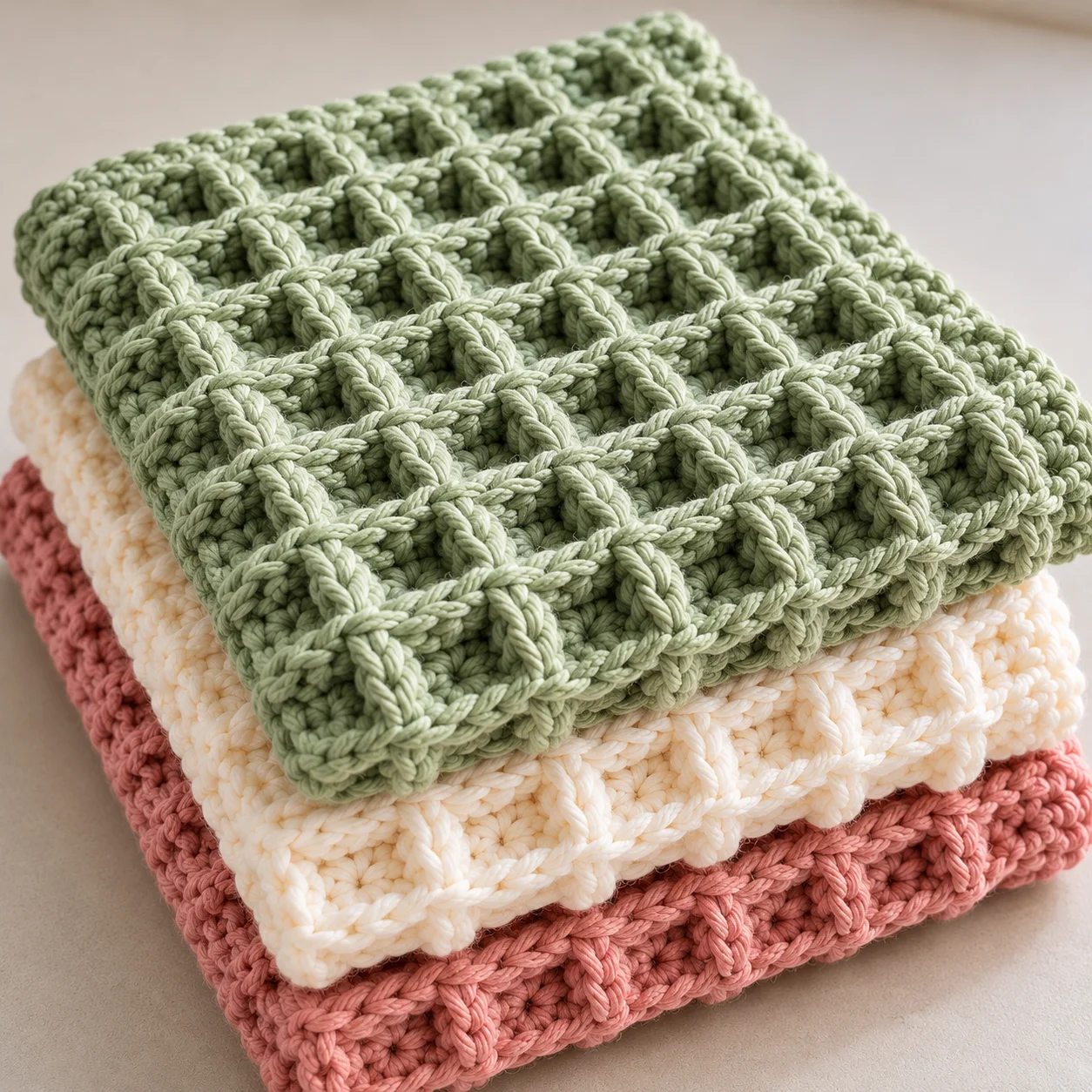
If you love practical crochet projects with beautiful texture, this waffle stitch crochet dishcloth is a wonderful addition to your handmade collection. The waffle stitch creates a raised, square-like pattern that resembles the surface of a freshly baked waffle, giving the fabric an attractive appearance and a satisfyingly textured feel.
A crocheted waffle stitch dishcloth is useful for everyday kitchen tasks, makes a thoughtful handmade gift, and is an excellent way to practice working front post double crochet stitches.
Cotton yarn is a popular choice because it is absorbent, washable, and durable enough for regular kitchen use. Choose a classic white or cream color for a farmhouse look, or brighten your kitchen with soft pastels and cheerful seasonal shades.
This tutorial explains the waffle stitch construction and provides a repeatable stitch sequence for the main fabric.
Pattern Overview
- Project: Waffle stitch dishcloth
- Skill level: Advanced beginner
- Construction: Flat rectangular piece worked in rows
- Stitch pattern: Double crochet and front post double crochet
- Suggested yarn: 100% cotton yarn
- Suggested colors: White, cream, gray, sage green, or your favorite kitchen colors
- Uses: Washing dishes, wiping countertops, and handmade gifts
Materials
Before starting, gather the following supplies:
- Worsted-weight cotton yarn
- A crochet hook appropriate for your yarn
- Scissors
- Yarn needle for weaving in ends
- Measuring tape, if you want to check the finished dimensions
Cotton is generally a good choice for dishcloths because it absorbs water and tolerates frequent washing. Avoid fuzzy yarns that shed fibers or make the stitch texture difficult to see.
The exact yarn quantity, hook size, gauge, and finished dimensions depend on the selected yarn and your personal tension.
Crochet Abbreviations
This pattern uses US crochet terminology.
- ch: Chain
- dc: Double crochet
- FPdc: Front post double crochet
- sl st: Slip stitch
- st(s): Stitch(es)
- rep: Repeat
- RS: Right side
- WS: Wrong side
Understanding the Waffle Stitch
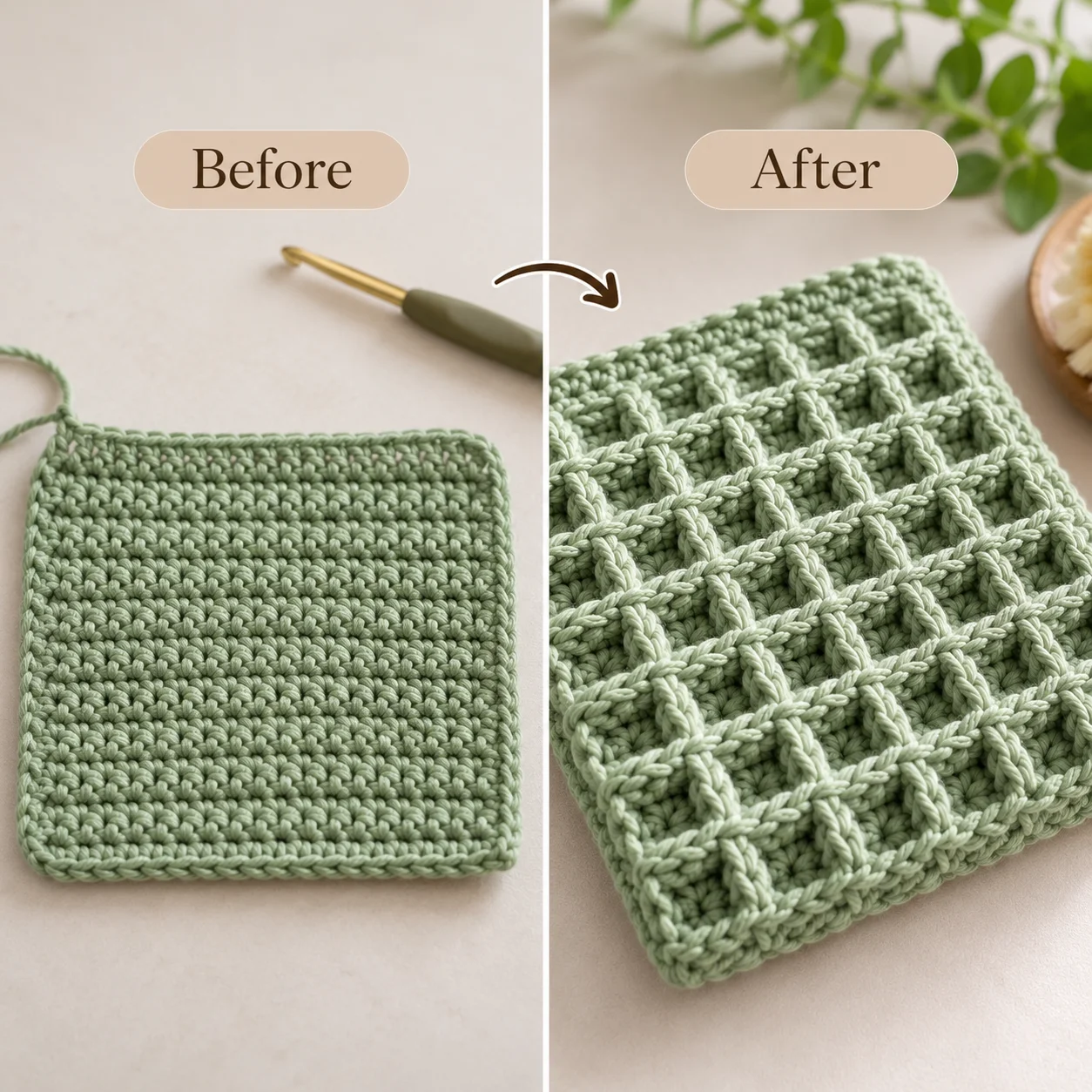
The waffle stitch combines ordinary double crochet stitches with front post double crochet stitches.
A front post double crochet is worked around the post of a stitch from the previous row rather than into the top loops. This pushes the stitch forward, creating a raised rib.
Alternating raised post stitches with regular double crochet stitches produces the characteristic grid-like waffle texture.
Waffle Stitch Crochet Dishcloth Instructions
Step 1: Make the Foundation Chain
Start with a foundation chain that accommodates the stitch repeat and the border you plan to use.
For a rectangular dishcloth, choose a chain length that will give you the desired width. Remember that the waffle stitch is thicker than a basic double crochet fabric, so the finished piece may be slightly narrower than expected.
Important: The foundation chain must be matched to the stitch repeat used in the pattern. No specific chain count or finished width is provided here because those dimensions have not been established for a tested sample.
Step 2: Work the First Row
Work double crochet stitches across the foundation chain, following the turning-chain convention you choose for the project.
Keep your stitches even and avoid pulling the yarn too tightly. This first row forms the foundation for the textured pattern.
Turn your work at the end of the row.
Step 3: Work the Waffle Stitch Row
On the next row, alternate ordinary double crochet stitches with front post double crochet stitches according to the waffle stitch repeat.
To make a front post double crochet:
- Yarn over.
- Insert the hook from the front of the fabric to the back around the post of the designated stitch.
- Bring the hook back to the front.
- Yarn over and pull up a loop.
- Yarn over and pull through two loops.
- Yarn over and pull through the remaining two loops.
This creates a raised stitch around the post of the previous row.
Step 4: Repeat the Texture
Continue working the waffle stitch pattern in rows.
On subsequent rows, work front post double crochet stitches around the appropriate raised posts and ordinary double crochet stitches where the pattern calls for them. The placement must be consistent from row to row to maintain the waffle effect.
As the fabric grows, the raised squares will become more visible.
Step 5: Check the Shape
Lay the dishcloth flat occasionally to check its shape.
A small amount of natural texture is expected, but the fabric should not curl dramatically or become heavily distorted. Uneven tension or incorrect post-stitch placement can affect the finished appearance.
Continue until the cloth reaches your preferred length.
Step 6: Add a Border
A simple single crochet border can create a neat, finished edge.
Work evenly around the sides, placing stitches along the row ends and appropriate stitches across the top and bottom edges. At the corners, work enough stitches to help the border turn smoothly without pulling or flaring.
The exact number of border stitches will depend on the dimensions and stitch structure of your dishcloth.
Join the border neatly and fasten off.
Step 7: Finish the Dishcloth
Use a yarn needle to weave in all loose ends securely.
Gently shape the dishcloth and wash it according to the yarn manufacturer’s care instructions. Allow it to dry completely before use.
Your finished waffle stitch fabric should have a defined raised texture that looks attractive and feels substantial in the hand.
Tips for Better Waffle Stitch Results
Keep your post stitches consistent. Insert your hook around the correct stitch post so the raised squares line up properly.
Count stitches regularly. Missing or adding stitches can change the fabric width and interrupt the waffle pattern.
Avoid overly tight tension. Tight stitches can make the fabric stiff and difficult to work into.
Use cotton yarn. Cotton is a practical choice for a washable kitchen cloth and helps the stitch definition remain visible.
Choose a simple border. A narrow border complements the textured center without competing with it.
Wash before use. A first wash can remove manufacturing residue and help you assess the fabric’s final texture and absorbency.
Customization Ideas
Classic Farmhouse Dishcloth
Choose white or cream cotton yarn and finish with a simple single crochet border for a clean, traditional appearance.
Modern Kitchen Colors
Try charcoal, sage green, dusty blue, or muted terracotta to coordinate with your kitchen décor.
Striped Waffle Dishcloth
Change colors at the end of selected rows to create horizontal stripes. Plan the color changes around the stitch repeat so the texture remains consistent.
Gift Set
Crochet several dishcloths in coordinating colors and pair them with handmade kitchen accessories for a practical gift.
Matching Kitchen Collection
Use the same cotton yarn and color palette to make dishcloths, washcloths, and other suitable household items.
Common Mistakes to Avoid
Why does my waffle stitch look flat?
The texture may be difficult to see if you are not working front post double crochet stitches around the correct posts. Check that the raised stitches are positioned consistently.
Why are my edges uneven?
Uneven edges can result from missed stitches, extra stitches, or inconsistent turning-chain treatment. Count the stitches at the end of each row and use the same turning method throughout.
Why does my dishcloth curl?
Curling may be caused by tight tension, inconsistent stitch placement, or an unsuitable border. Check the fabric while it is still in progress and adjust the tension if necessary.
Why is the fabric too thick?
The waffle stitch naturally produces a thicker fabric than basic double crochet. If you prefer a softer, more flexible dishcloth, try a different hook size or a lighter cotton yarn, then check the resulting fabric before making the full project.
Care Instructions
Wash your dishcloth regularly according to the care instructions for your yarn. Cotton dishcloths can often be machine washed, but the recommended temperature and drying method vary by yarn.
Allow the cloth to dry thoroughly between uses, and replace it when it becomes worn, develops persistent odors, or no longer cleans effectively.
Frequently Asked Questions
Is the waffle stitch good for crochet dishcloths?
Yes. Its raised texture makes it a popular option for kitchen cloths, although the thicker fabric may take longer to dry than a thinner stitch pattern.
Is the waffle stitch beginner-friendly?
It is suitable for advanced beginners who understand double crochet and are ready to learn front post double crochet. Practicing the post stitch on a small swatch can help before starting the dishcloth.
What yarn is best for a waffle stitch dishcloth?
Worsted-weight cotton yarn is a practical choice because it is absorbent, washable, and provides clear stitch definition.
Can I make a larger dishcloth?
Yes. Adjust the foundation width and number of rows to suit your preferred dimensions, making sure to preserve the stitch repeat.
Can I use acrylic yarn?
You can, but cotton is generally more suitable for a dishcloth because of its absorbency and everyday kitchen use.
Does the waffle stitch use more yarn?
The raised texture creates a relatively dense fabric, so a waffle stitch project may use more yarn than a similarly sized project made with a simpler stitch. The exact difference depends on the stitch pattern and tension.
Conclusion
The waffle stitch crochet dishcloth combines practical everyday use with a beautiful raised texture. Its grid-like appearance makes it a lovely choice for farmhouse kitchens, handmade gifts, and coordinated crochet collections.
Choose a suitable cotton yarn, keep your front post stitches consistent, and check your edges as you work. With careful tension and neat finishing, you can create a textured dishcloth that looks attractive and is ready for everyday use.
Pattern accuracy note: This tutorial explains the waffle stitch construction and finishing techniques, but it does not provide a fully specified, tested row-by-row pattern with verified stitch counts. Those details should be established before publishing it as a complete stitch-counted crochet pattern.