Crochet Houndstooth Baby Sweater
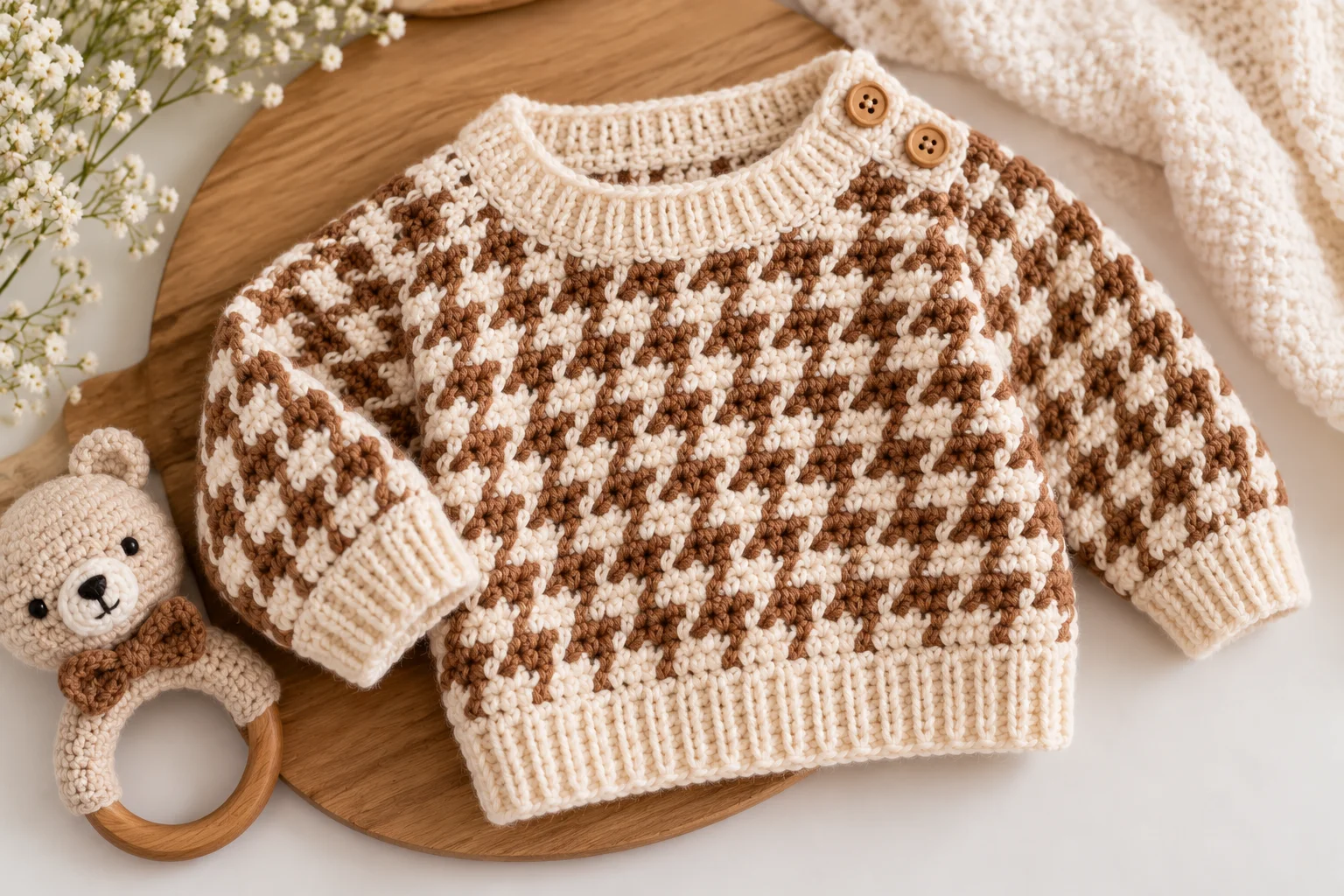
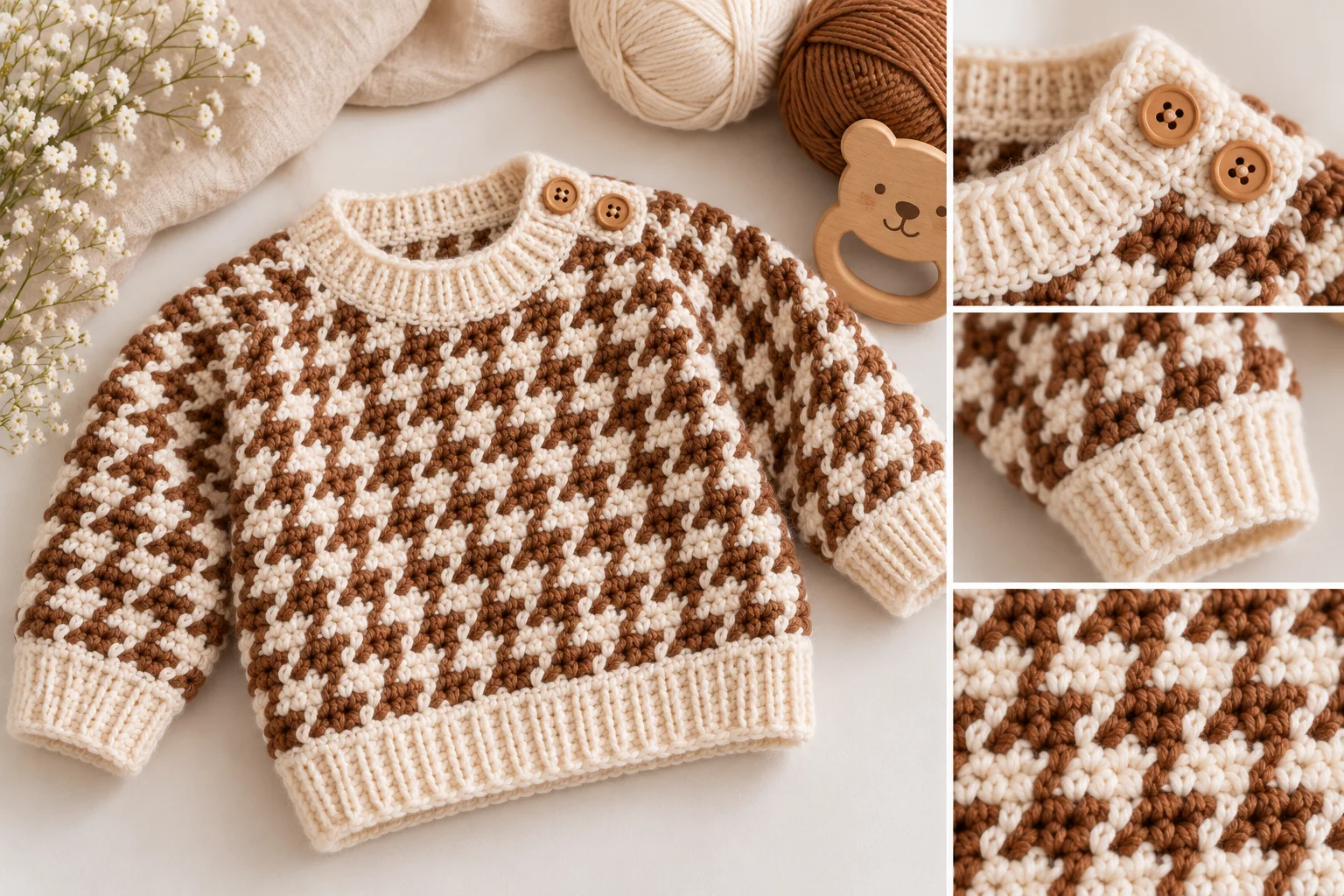
A crochet houndstooth baby sweater is a beautiful choice for anyone who loves classic patterns and handmade baby clothing. With its distinctive two-color design, timeless texture, and cozy feel, this little sweater combines traditional style with the charm of crochet.
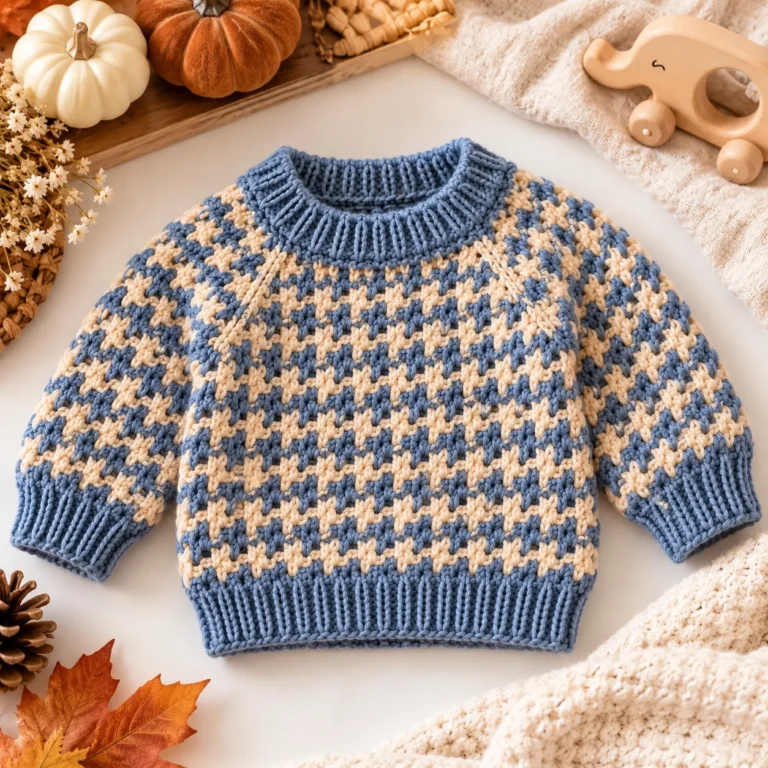
The houndstooth pattern is recognizable by its repeating checks and pointed shapes. Traditionally made with contrasting colors, it creates a striking fabric that looks elegant in black and white, soft in cream and gray, or playful in pastel shades.
A baby sweater featuring this pattern can make a thoughtful baby shower gift, a special handmade outfit, or a lovely addition to a little one’s wardrobe. Depending on the design, you can create the patterned fabric across the entire sweater or use houndstooth details on the front, sleeves, or yoke.
In this guide, you’ll learn about yarn selection, the crochet techniques used to create a houndstooth effect, sizing considerations, and practical tips for finishing a beautiful baby sweater.
What Is a Crochet Houndstooth Baby Sweater?
Houndstooth is a traditional textile pattern made from repeating broken checks that form small, pointed shapes. In crochet, a similar appearance can be created by combining contrasting yarn colors and repeating groups of stitches.
The exact stitch combination varies by pattern. Some designs use alternating single crochet and double crochet stitches, while others use modified stitch patterns to produce a more pronounced check effect.
A crochet houndstooth baby sweater typically features:
- Two contrasting yarn colors
- A repeating check-inspired stitch pattern
- A comfortable sweater or cardigan shape
- Ribbed or simple edging around the neckline, cuffs, and hem
- Optional buttons or decorative details
The result is a garment that looks sophisticated without requiring elaborate embellishments.
Why Choose a Houndstooth Baby Sweater?
A Timeless Pattern
Houndstooth has a classic appearance that works well across different seasons. A neutral color combination creates an elegant look, while brighter shades give the sweater a playful finish.
Beautiful Color Contrast
The design relies on contrasting colors to make the repeating pattern stand out. You can choose traditional black and white or experiment with softer combinations such as cream and taupe.
A Thoughtful Handmade Gift
A crocheted baby sweater is a meaningful handmade gift for a baby shower, newborn celebration, or first birthday. Its classic pattern makes it suitable for many different styles.
Opportunities for Customization
You can use the houndstooth stitch across the entire garment or introduce it as a decorative panel. Solid-color sleeves and borders can help balance the busy pattern.
Materials Needed
The exact materials depend on the construction and size of the sweater you choose to make.
1. Yarn in Two Colors
Choose two yarn colors with enough contrast for the houndstooth design to remain visible.
Popular combinations include:
- Black and white for a traditional appearance
- Cream and charcoal for a softer monochrome look
- Dusty pink and ivory for a delicate baby sweater
- Sage green and cream for a natural color palette
- Navy and white for a classic combination
- Mustard and gray for a modern look
Select a soft, washable yarn suitable for baby clothing. DK-weight yarn is often a good option for lightweight sweaters, but always follow the yarn weight specified by your chosen pattern.
2. Crochet Hook
Use the hook size recommended by your pattern. Your individual tension may require a different size to achieve the intended gauge.
3. Tapestry Needle
A tapestry needle is useful for weaving in yarn ends and joining any separate sweater pieces.
4. Stitch Markers
Stitch markers help identify the beginning of rounds, sleeve openings, and important shaping points.
5. Buttons and Other Optional Notions
If your design has a front opening, you may need buttons and a button band. Choose closures that complement the sweater and can be attached securely.
Crochet Abbreviations
The following abbreviations use US crochet terminology.
- ch: Chain
- sc: Single crochet
- hdc: Half double crochet
- dc: Double crochet
- sl st: Slip stitch
- st(s): Stitch(es)
- sk: Skip
- rep: Repeat
- RS: Right side
- WS: Wrong side
Check the stitch definitions in your chosen pattern because different houndstooth designs may use different combinations of stitches.
Understanding the Houndstooth Crochet Stitch
The houndstooth effect comes from repeating a stitch sequence while alternating two colors. The contrasting stitches create the appearance of broken checks across the fabric.
Before beginning the sweater, practice the stitch pattern in a small swatch.
Step 1: Choose Your Two Colors
Select a main color and a contrasting color. Strong contrast makes the pattern easier to see.
Step 2: Practice the Stitch Repeat
Follow the stitch sequence specified by your pattern. Some versions combine single crochet and double crochet stitches, while others use different stitch groupings.
Pay attention to the number of stitches required for each repeat.
Step 3: Change Colors Consistently
Follow the pattern’s color-change instructions to maintain the repeating design. Depending on the construction, you may carry unused yarn along the row, work over it, or fasten off and rejoin the colors.
Avoid carrying long, loose strands across the fabric because they can snag and create an untidy finish.
Step 4: Check the Pattern Alignment
After completing several rows, examine the fabric to ensure the contrasting stitches form a consistent houndstooth effect.
A small practice swatch helps you identify tension problems before you begin the sweater.
Gauge and Sizing
Gauge is essential when crocheting clothing. Even a small difference in stitch tension can affect the finished chest circumference, body length, and sleeve fit.
Make a gauge swatch using the yarn, hook, and houndstooth stitch pattern specified by your chosen design.
Measure the swatch and compare it with the pattern’s stated gauge. Adjust your hook size if necessary.
When selecting a baby sweater size, consider the following measurements:
- Chest circumference
- Body length
- Sleeve length
- Shoulder width
- Armhole depth
Baby sizes can vary considerably between patterns. Use the finished measurements and, when possible, the baby’s actual measurements rather than relying on age alone.
How to Make a Crochet Houndstooth Baby Sweater
The construction process depends on the pattern. Some sweaters are made from separate panels, while others are worked from the neckline downward or constructed in one piece.
The following steps explain the general process without inventing specific stitch counts or measurements.
Step 1: Choose the Sweater Construction
Decide whether you prefer a pullover or a cardigan.
A pullover has no front opening, while a cardigan includes an opening that may use buttons or another closure. Choose a construction method that matches your experience and the pattern’s instructions.
Step 2: Make a Gauge Swatch
Crochet a swatch in the houndstooth stitch pattern. Check both the stitch gauge and the appearance of the colorwork.
This step helps you confirm that the fabric is comfortable and that the repeating design looks balanced.
Step 3: Crochet the Main Body
Follow your chosen pattern to create the front and back sections or work the body in one piece.
Keep track of the stitch repeat and change colors as instructed. Count stitches regularly to maintain the intended width.
Step 4: Create the Sleeves
Work the sleeves according to the pattern. Some designs use the houndstooth pattern throughout, while others use a solid color to create contrast.
Keep both sleeves consistent in length and width.
Step 5: Assemble the Sweater
If the sweater uses separate pieces, join the shoulders and side seams as directed. Attach the sleeves carefully, making sure they are positioned correctly.
Keep seams secure but flexible so the sweater remains comfortable to wear.
Step 6: Add the Neckline, Cuffs, and Hem
Finish the edges according to the pattern. A simple single crochet border or ribbed edging can provide a neat frame for the houndstooth fabric.
Choose a border color that complements the main design without overwhelming it.
Step 7: Finish the Color Changes
Weave in all yarn ends securely. Inspect the wrong side of the sweater for loose strands or long floats that could catch on fingers or other objects.
Step 8: Add Buttons if Needed
For a cardigan, attach buttons securely and check that the buttonholes fit properly. Avoid decorative additions that could detach during use.
Step 9: Wash and Shape the Sweater
Follow the yarn manufacturer’s care instructions. If the fiber is suitable for blocking, gently shape the sweater to the intended measurements and allow it to dry completely.
Tips for a Beautiful Houndstooth Design
Choose Colors with Enough Contrast
The houndstooth pattern is most visible when the two colors are clearly distinguishable. Similar shades may create a subtler effect but can make the design less recognizable.
Maintain Consistent Tension
Uneven stitches can distort the checks and make the fabric look irregular. Try to keep your tension consistent throughout the project.
Follow the Stitch Repeat Carefully
Houndstooth designs depend on a repeating sequence. Missing or adding stitches can interrupt the pattern, so count regularly.
Keep the Fabric Comfortable
A baby sweater should feel soft and flexible. Avoid making the fabric excessively dense or stiff.
Plan Color Changes in Advance
Two-color crochet can produce several yarn ends. Organize the color changes before beginning so the back of the fabric remains neat.
Use Simple Edging
A solid-color border can frame the houndstooth design beautifully. Keeping the neckline, cuffs, and hem simple allows the pattern to remain the main feature.
Customization Ideas
Traditional Black-and-White Sweater
Use black and white yarn for a bold, classic look. This combination creates a strong contrast that makes the houndstooth pattern easy to recognize.
Soft Neutral Baby Sweater
Combine cream and light gray for a gentle, understated appearance. This palette works well for a versatile handmade gift.
Pastel Houndstooth Sweater
Choose two pastel colors, such as blush pink and ivory or pale blue and cream. The result is softer and more playful than a traditional monochrome design.
Houndstooth Panel Sweater
Use the pattern only across the front or yoke while keeping the sleeves and back in a solid color. This approach reduces the amount of colorwork and creates a balanced appearance.
Matching Accessories
Use the same color combination to crochet a coordinating hat, blanket, or other accessory. Select a suitable pattern for each item and ensure the finished pieces are comfortable and practical.
Common Mistakes to Avoid
Skipping the gauge swatch: The finished sweater may be too large or too small if your tension differs from the pattern.
Using colors that blend together: Low contrast can make the houndstooth effect difficult to see.
Losing track of the stitch repeat: Missed stitches can interrupt the repeating pattern.
Carrying yarn too loosely: Loose strands on the wrong side can snag or make the fabric uneven.
Pulling seams too tightly: Tight joins can reduce flexibility and affect the fit.
Ignoring finished measurements: Always check the sweater’s intended chest circumference and length before assembly.
Leaving loose ends unsecured: Secure yarn ends properly to help prevent unraveling during wear and washing.
Baby Sweater Safety
Choose yarn suitable for baby clothing and finish all seams securely. Inspect the garment for loose strands, weak joins, and decorations that could detach.
If your design uses buttons, attach them firmly and inspect them regularly. Avoid beads, pearls, and other small embellishments that could create a choking hazard. Do not add long cords or ties that could pose a strangulation risk.
Check that the sweater fits comfortably without restricting movement. A handmade garment is not automatically safe simply because it is crocheted.
Frequently Asked Questions
Is a crochet houndstooth baby sweater suitable for beginners?
It can be suitable for confident beginners who understand basic stitches and color changes. A simple pattern with clear stitch repeats and minimal shaping is the best place to start.
What yarn is best for a houndstooth baby sweater?
Soft, washable DK-weight yarn is a useful option for lightweight baby garments when it matches the pattern’s requirements. Choose two colors that provide enough contrast for the design.
Which crochet stitches create a houndstooth effect?
The stitch combination depends on the pattern. Some designs use alternating single crochet and double crochet stitches with two colors, while others use modified stitch combinations to create the characteristic checks.
Can I crochet a houndstooth baby cardigan instead of a pullover?
Yes. The houndstooth stitch can be incorporated into a cardigan, provided the pattern accounts for the front opening, button band, and garment shaping.
Can I use more than two colors?
Yes. You can introduce additional colors for a more playful appearance. However, two contrasting colors usually create the most recognizable houndstooth effect.
How do I keep the colorwork neat?
Follow the pattern’s color-change method, maintain even tension, and avoid loose strands on the wrong side. Weave in yarn ends securely during finishing.
How do I choose the right baby sweater size?
Use the finished measurements provided by the pattern and compare them with the baby’s measurements when possible. Age labels alone may not provide a reliable fit.
Conclusion
A crochet houndstooth baby sweater combines classic style with the charm of handmade clothing. Its repeating checks create a distinctive design, while the choice of yarn colors allows you to make the garment traditional, modern, or softly playful.
For the best results, choose a pattern with clear stitch repeats and sizing instructions, check your gauge, and keep your color changes consistent. With careful construction and neat finishing, you can create a beautiful baby sweater that makes a thoughtful handmade gift.
Whether you choose traditional black and white, gentle neutrals, or pastel shades, a houndstooth baby sweater is a lovely way to explore two-color crochet and create a timeless garment for a little one.