Vintage Crochet Flower Potholder
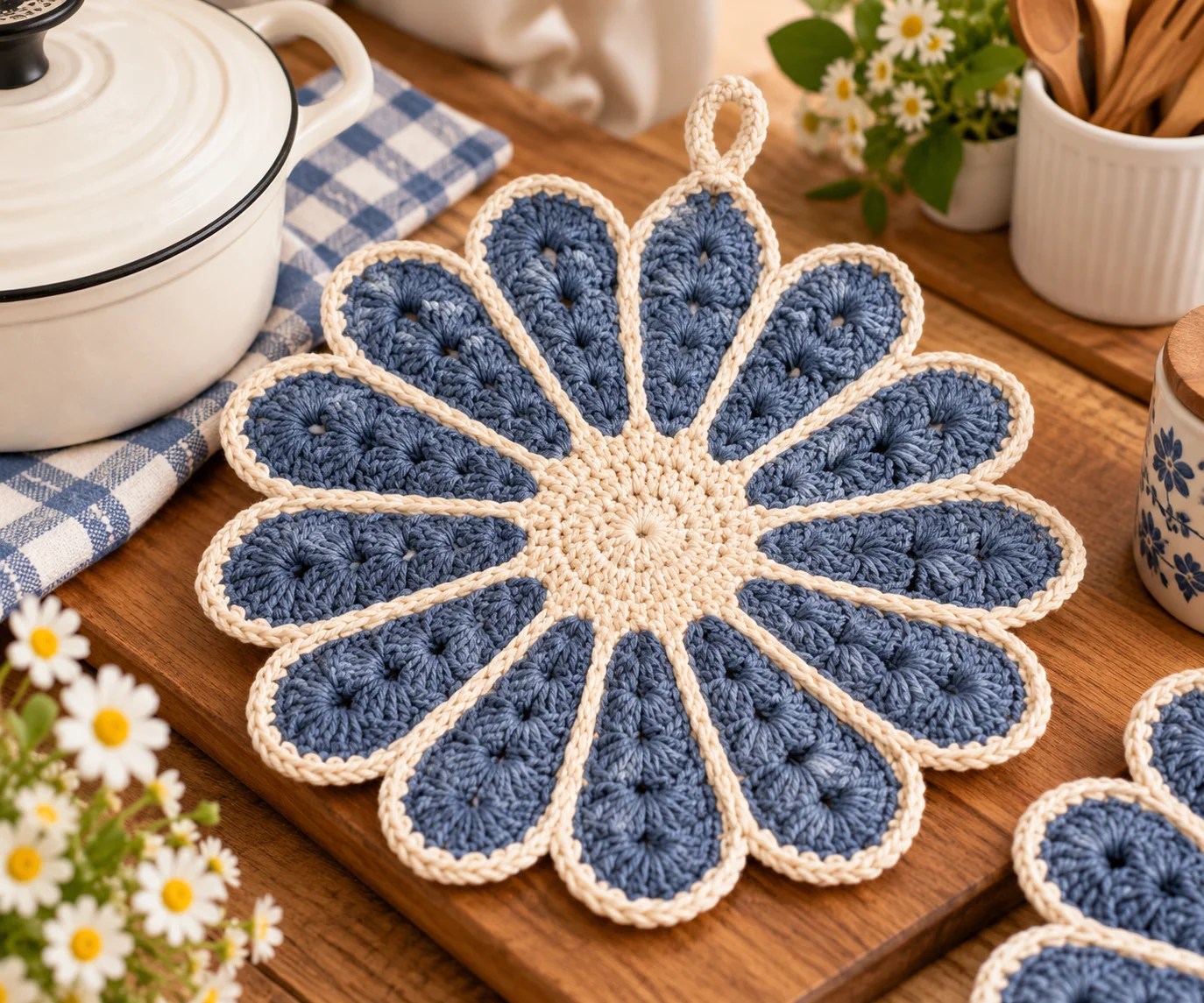
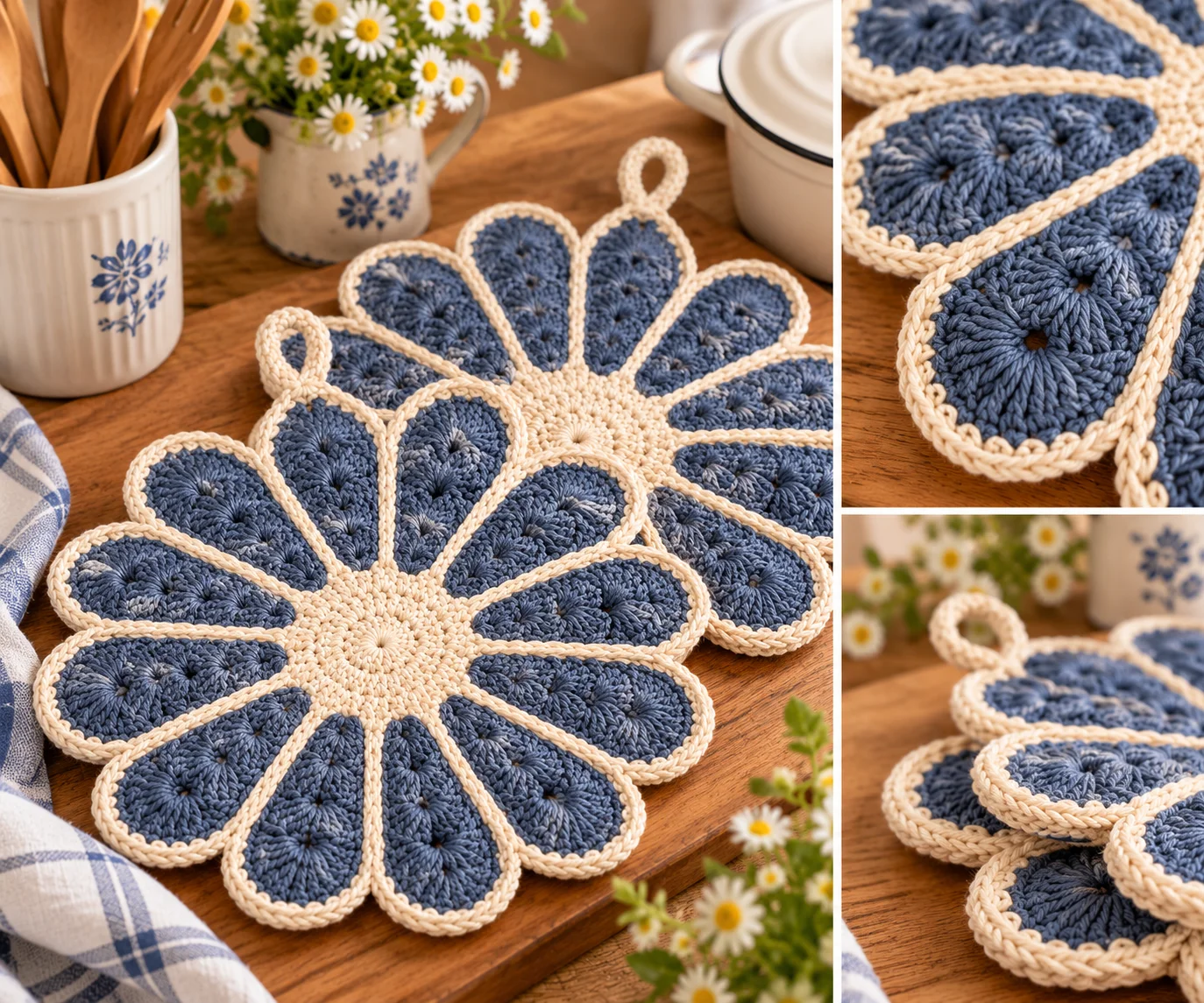
Add a little old-fashioned charm to your kitchen with a vintage crochet flower potholder. This pretty flower-shaped hot pad is practical, decorative, and makes a wonderful handmade gift.
The vintage flower potholder design has been recreated in several versions over the years. One modern version by Nicky Jones of Jewels and Jones is based on a vintage pattern and creates a double-thick flower by crocheting two matching pieces and joining them together. The finished potholder measures approximately 9 x 9 inches.
This project is a great way to use cotton yarn and experiment with different color combinations. Make one for your own kitchen or crochet a matching set for a housewarming, birthday, or holiday gift.
Project Overview
Project Type: Crochet potholder
Shape: Flower
Finished Size: Approximately 9 x 9 inches
Skill Level: Easy to Intermediate
Crochet Terminology: US
Construction: Two crocheted flower pieces joined together
Main Stitch: Double crochet
Best Yarn: 100% cotton
Recommended Hook: 3.0 mm for the Nicky Jones version
The original modern version is designed to be double-thick, making it more substantial than a single-layer decorative crochet piece.
Materials
For a potholder similar to the modern vintage-inspired version, you will need:
• Fingering-weight 100% cotton yarn in two or more colors
• 3.0 mm crochet hook
• Tapestry or darning needle
• Scissors
• Stitch markers, optional
The published Nicky Jones version uses Scheepjes Catona in Linen and Charcoal and a 3.0 mm crochet hook. The pattern listing specifies approximately 411 yards of yarn in total.
Cotton is the preferred fiber for this type of kitchen project because it is durable and does not have the same melt characteristics as many synthetic fibers.
Crochet Abbreviations
This article uses standard US crochet terminology.
• ch – chain
• dc – double crochet
• sc – single crochet
• sl st – slip stitch
• st – stitch
• sts – stitches
• rep – repeat
Gauge
The published gauge for the Nicky Jones version is:
20 double crochet stitches x 8 rows = 4 inches
Gauge is less important for a potholder than it would be for a fitted garment, but it can affect the finished size and the amount of yarn required.
For a kitchen potholder, pay particular attention to your tension. A dense fabric is preferable to a loose, open fabric.
Finished Size
The finished flower potholder is approximately:
9 x 9 inches
The measurement is taken from one outer petal to the opposite outer petal.
Your finished size may vary slightly depending on your yarn, hook size, and tension.
How the Vintage Flower Potholder Is Made
The flower construction is simple but clever.
Instead of crocheting one thick piece, you make two matching flower-shaped pieces. The pieces are then placed together and joined around their edges.
This creates a double layer of crochet and gives the potholder a sturdy feel. The original modern pattern describes the finished piece as double-thick and suitable for kitchen use.
The center begins as a circular crochet motif. Additional rounds of double crochet gradually increase the circumference, eventually creating the rounded flower petals.
Step 1: Crochet the First Flower
Begin by crocheting a small circular center.
The first rounds use double crochet increases to expand the circle evenly.
As the rounds progress, the number of stitches increases and the outer edge begins to develop the shape needed for the flower petals.
Count your stitches carefully during these early rounds. Maintaining the correct number of stitches is important for keeping the flower symmetrical.
Step 2: Continue Building the Flower Shape
Once the center is established, continue working the designated increase pattern.
The flower develops as the outer rounds become wider.
Keep your tension firm and consistent. A loose tension can create a floppy potholder, while extremely tight tension can make it difficult to insert the hook into the stitches.
The vintage-inspired design uses double crochet as its primary stitch, which allows the flower to grow quickly while maintaining a recognizable floral shape.
Step 3: Make the Second Flower
Make a second flower piece using the same construction.
Try to keep the two pieces approximately the same size. Matching the pieces makes the joining process much easier and produces a neater finished potholder.
If you are using multiple colors, you can make both flowers identical or reverse the color arrangement for an interesting two-sided design.
Step 4: Join the Two Layers
Place the two flower pieces together with the wrong sides facing each other.
Join the pieces around the outside edge using the joining method specified by your chosen pattern.
The two layers should remain aligned as you work around the flower.
Pay particular attention to the points between the petals. These areas can easily become uneven if the layers are not aligned correctly.
Step 5: Finish the Edges
Once the two flower pieces have been joined, secure the final yarn end and weave it into the fabric.
Trim any excess yarn.
If you want to hang the potholder, add a small crochet loop at one of the edges.
A hanging loop is optional, but it makes the finished potholder convenient to store on a kitchen hook.
Color Ideas
One of the best things about a vintage flower potholder is how easily you can customize the colors.
Classic Vintage Colors
Try combinations such as:
• Cream and rust
• Mustard and brown
• Olive green and cream
• Dusty blue and ivory
• Terracotta and beige
Modern Neutrals
For a contemporary kitchen, try:
• Cream and charcoal
• Beige and white
• Black and natural
• Gray and ivory
Bright Retro Colors
For a cheerful vintage look, combine:
• Orange
• Golden yellow
• Avocado green
• Turquoise
• Pink
• Red
You can use one color for the center and another for the petals, or change colors between rounds.
Choosing the Right Yarn
100% cotton is the best choice for a functional crochet potholder.
Cotton produces a sturdy fabric and is widely used for crochet kitchen accessories.
Avoid using acrylic or other heat-sensitive synthetic yarns for potholders intended to come into contact with hot cookware. Synthetic fibers can soften or melt when exposed to high temperatures.
A cotton yarn with good stitch definition also makes the flower shape easier to see.
Tips for a Better Flower Potholder
Keep Your Tension Firm
A potholder should have a relatively dense fabric.
If your stitches are very loose, the finished item may not provide enough separation between your hand and a warm object.
Count Your Stitches
Flower motifs depend on balanced increases.
If you accidentally add or skip stitches, the petals may become uneven.
Count at the end of each round, particularly when you are learning the pattern.
Use Stitch Markers
Place a stitch marker in the first stitch of each round if you have difficulty identifying where the round begins.
This can make counting much easier.
Match the Two Layers
Before joining the flowers, place them on top of each other and check that the petals line up.
If one piece is noticeably larger, check your stitch count and tension before joining.
Weave in Ends Securely
Kitchen accessories receive frequent handling and washing, so secure every yarn end carefully.
Weave each end through several stitches before trimming it.
Common Mistakes
Uneven Petals
Uneven petals are usually caused by an incorrect stitch count or inconsistent increases.
Check your stitch count before continuing to the next round.
A Potholder That Is Too Loose
If the fabric has large gaps, your hook may be too large or your tension may be too loose.
Try a smaller hook while keeping the yarn weight consistent.
Layers That Do Not Match
If the two flower pieces have different sizes, compare their stitch counts and gauge.
Making the pieces separately without checking their dimensions can make joining difficult.
Using the Wrong Fiber
Do not substitute acrylic yarn simply because it is inexpensive or readily available.
For a potholder intended for hot kitchen items, choose an appropriate heat-resistant natural fiber such as cotton.
Can You Wash a Crochet Flower Potholder?
Cotton crochet potholders are generally washable, but always check the care instructions for your particular yarn.
Wash the potholder as recommended by the yarn manufacturer and allow it to dry completely before using or storing it.
Because kitchen items can accumulate grease and food residue, washable cotton is a particularly practical choice.
Vintage Flower Potholder Variations
Smaller Flower
Use a lighter yarn and smaller hook to create a smaller decorative flower.
Larger Flower
Use a thicker cotton yarn and appropriate hook to make a larger hot pad.
Remember that changing yarn weight changes the finished dimensions and fabric thickness.
Two-Tone Flower
Use one color for the center and another color for the outer petals.
This is one of the easiest ways to create a strong vintage-inspired look.
Multicolor Flower
Change colors between rounds to create a colorful retro design.
This is also a great project for using leftover cotton yarn.
Matching Kitchen Set
Make several potholders in coordinating colors and pair them with crochet dishcloths, coasters, or kitchen towels for a handmade gift set.
Safety Tips
A crochet potholder is designed to provide a layer of protection when handling warm kitchen items, but crochet fabric should not be treated as guaranteed protection against extreme heat.
Always use appropriate oven mitts or heat-resistant kitchen equipment when handling very hot cookware.
Never place a crocheted potholder directly against an open flame, heating element, or other extreme heat source.
Keep the potholder clean and dry, and replace it if the fabric becomes badly worn or damaged.
Frequently Asked Questions
What yarn is best for a crochet potholder?
100% cotton is one of the best choices for crochet potholders because it is durable and suitable for kitchen use.
What size is the vintage flower potholder?
The modern vintage-inspired version by Nicky Jones measures approximately 9 x 9 inches from petal to petal.
Is the vintage flower potholder double thick?
Yes. The Nicky Jones design uses two crocheted flower pieces that are joined together to create a double-thick potholder.
What crochet hook should I use?
The published Nicky Jones version uses a 3.0 mm crochet hook with fingering-weight cotton yarn.
Can I use worsted-weight cotton?
You can adapt the general flower concept to another yarn weight, but the finished size and stitch counts will change. If you are following a specific published pattern, use the yarn weight and hook recommended by that designer.
Can I sell finished crochet potholders?
Whether you can sell finished items depends on the specific pattern designer’s terms. If you use a designer’s copyrighted pattern, check the designer’s stated permissions before selling finished pieces.
Are crochet potholders safe for hot pans?
A crochet potholder can provide a layer of insulation, but it should not be considered a substitute for appropriate heat-resistant kitchen equipment. Use cotton yarn and avoid direct contact with flames or heating elements.
Conclusion
The vintage crochet flower potholder is a charming project that combines practical kitchen use with nostalgic crochet style.
Its flower shape makes it much more interesting than an ordinary square potholder, while the double-layer construction gives it a sturdy feel. Using cotton yarn also makes it a practical project for the kitchen.
Try classic vintage colors for a retro look, or use neutral shades for a modern farmhouse kitchen. You can also crochet several flowers in different color combinations to create a coordinated handmade kitchen set.
The vintage flower design is a wonderful example of how a simple crochet motif can become both decorative and useful. With cotton yarn, careful stitch counting, and firm tension, you can create a pretty handmade potholder that also makes a thoughtful gift.