Crochet Toys: A Style Guide for Every Skill Level
Crochet toys have exploded in popularity over the last few years, and it’s not hard to see why. A hand-stuffed, slightly wonky-eyed amigurumi has more personality than almost anything you can buy — and once you learn the basic shapes, the possibilities are nearly endless.
If you’re browsing crochet toys for a first project, a gift idea, or just inspiration for your next hook-and-yarn session, this guide breaks down the most popular styles by category, along with the materials and skill level each one calls for.
What You Need to Know Before Starting
Almost all crochet toys are made using amigurumi technique — a Japanese crochet style built almost entirely from single crochet stitches worked in a spiral, which creates a tight, stuffing-proof fabric. Unlike blankets or garments, toys don’t need drape or stretch; they need a firm, dense stitch that won’t let stuffing peek through.
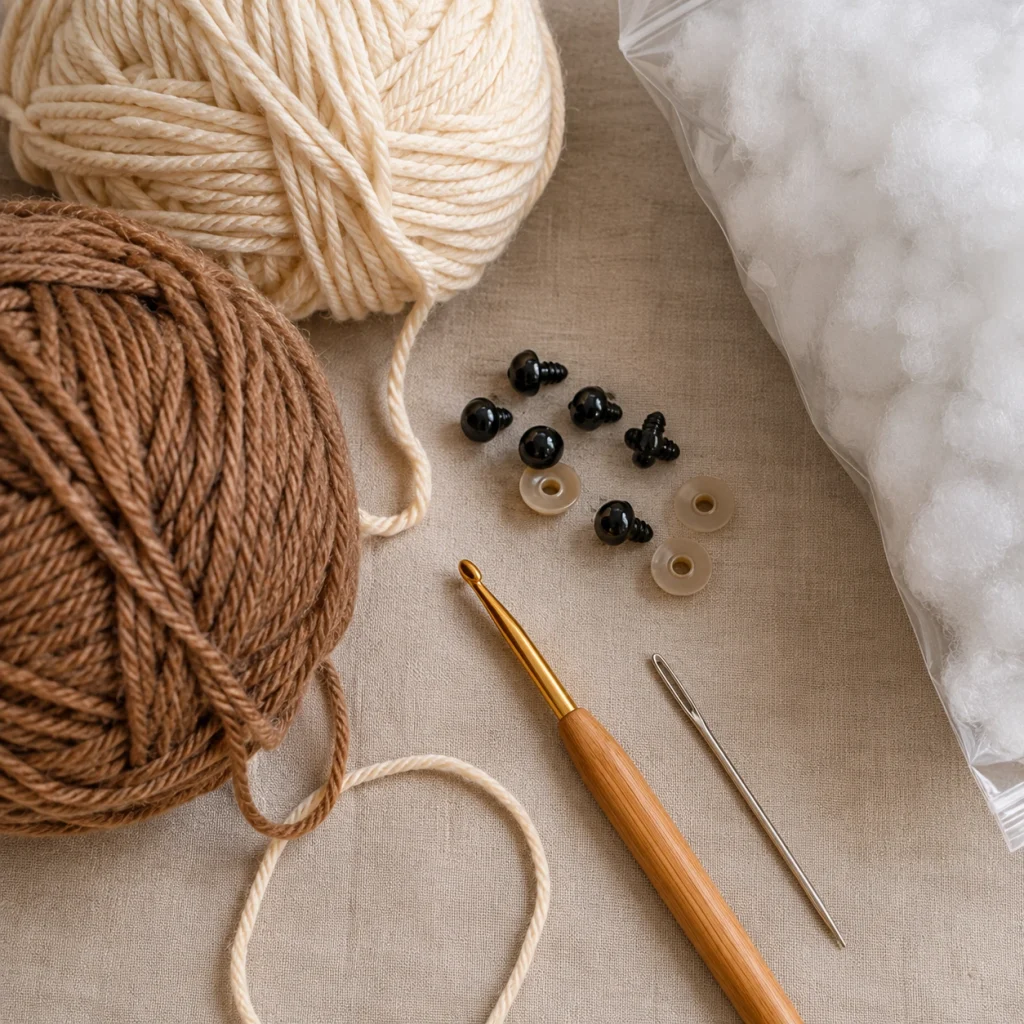
Typical materials across most toy styles:
- Yarn weight: worsted (#4) or DK (#3) — worsted is more common and beginner-friendly
- Hook size: 1–2 sizes smaller than the yarn label recommends (this tightens the stitches)
- Polyester fiberfill stuffing
- Stitch markers (essential for tracking spiral rounds)
- Yarn needle for closing seams and embroidering faces
- Safety eyes (optional) or embroidery floss for a child-safe alternative
A quick safety note: for toys intended for infants or toddlers under 3, skip plastic safety eyes and embroider facial features instead — small attached parts are a choking hazard for very young children.
Classic Animal Amigurumi
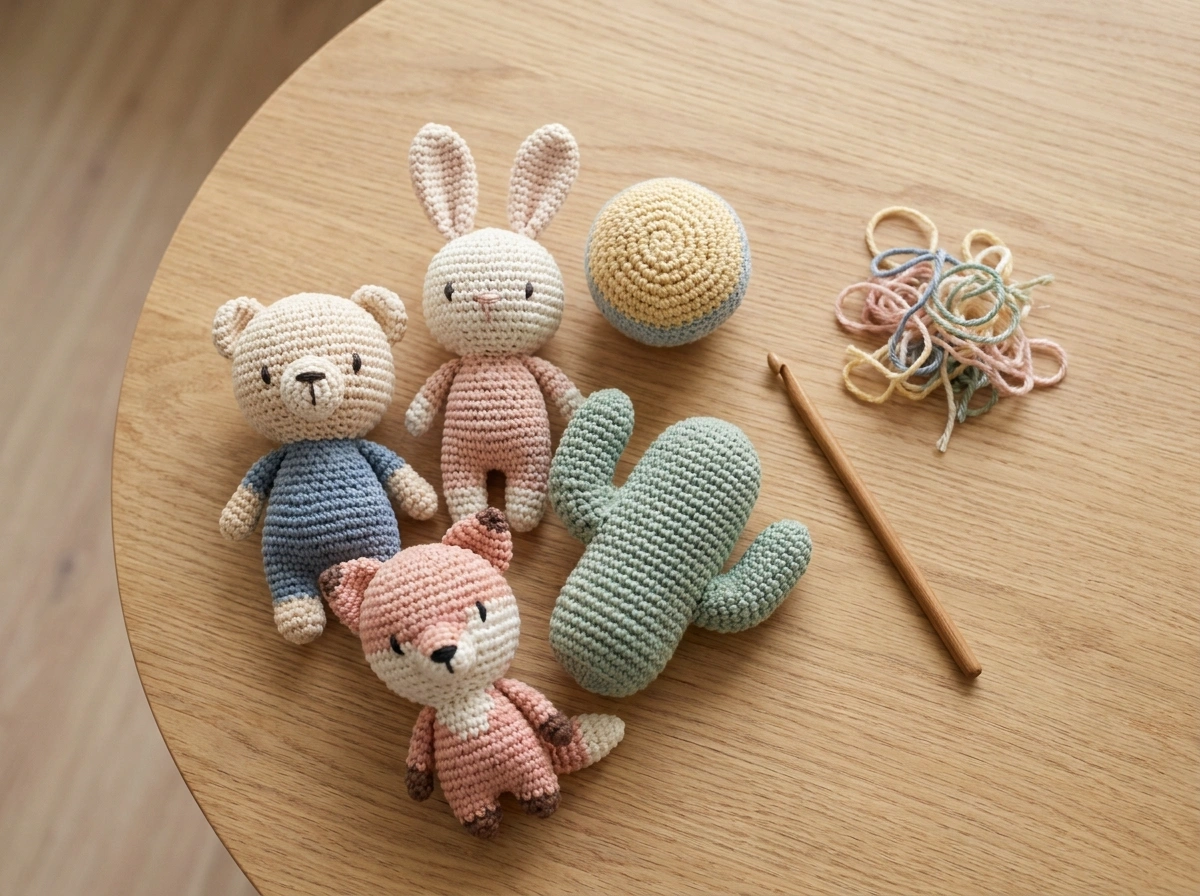
This is the category most people picture when they think of crochet toys — round-bodied animals with simple, friendly faces. It’s also the most beginner-accessible style, since most animal amigurumi are built from the same handful of basic shapes: spheres, ovals, and small cylinders for limbs.
Popular options: teddy bears, bunnies, foxes, elephants, owls
Skill level: Beginner to intermediate
Typical size: 6–10 inches tall
Time estimate: 4–8 hours per toy, depending on size and detail
The trick to making these look polished rather than lumpy is consistent tension and firm stuffing — pack the stuffing in more tightly than feels natural, especially in the head, so the shape holds.
Mini & Keychain-Sized Amigurumi
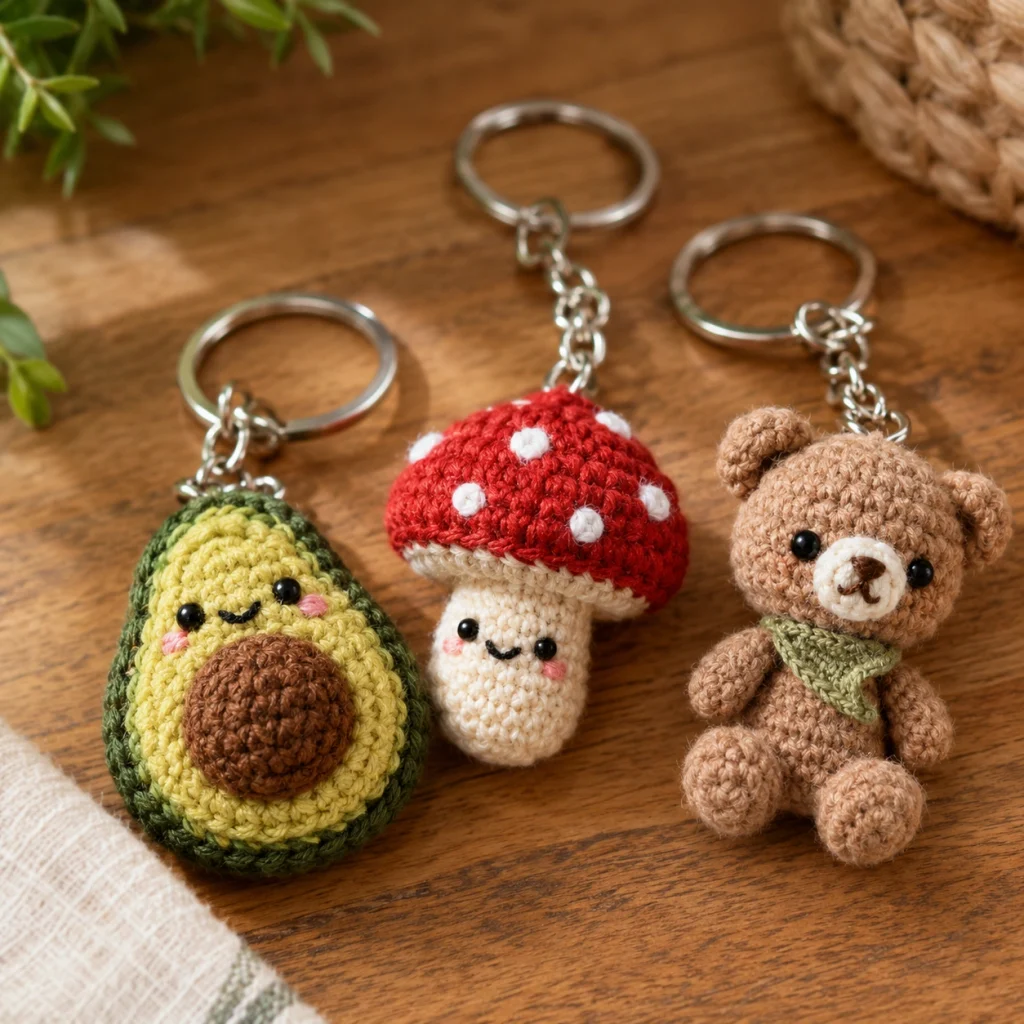
For a faster project or a gift that doubles as an accessory, miniature amigurumi (typically 2–4 inches) have become hugely popular for bag charms, keychains, and stocking stuffers.
Popular options: tiny animals, food-shaped charms (avocados, donuts, mushrooms), miniature characters
Skill level: Beginner-friendly, good first project
Typical size: 2–4 inches
Time estimate: 1–2 hours per piece
These work best with a smaller hook (2.5mm–3.5mm) and fingering or sport weight yarn, since fine stitches keep the proportions from looking chunky at such a small scale.
Plant & Nature-Inspired Toys
Not every crochet toy needs a face. Crochet cacti, succulents, and mushrooms have become a favorite low-pressure project — they’re forgiving of imperfect stitches (real plants aren’t symmetrical either) and double as long-lasting decor rather than just a toy.
Popular options: potted cacti, succulent arrangements, toadstool mushrooms
Skill level: Beginner
Typical size: 4–8 inches
Time estimate: 2–4 hours per piece
These are often finished off in a small terracotta pot with the crochet piece stuffed and glued or stitched into floral foam, which makes them a popular no-sew-required gift.
Character & Pop-Culture Inspired Toys
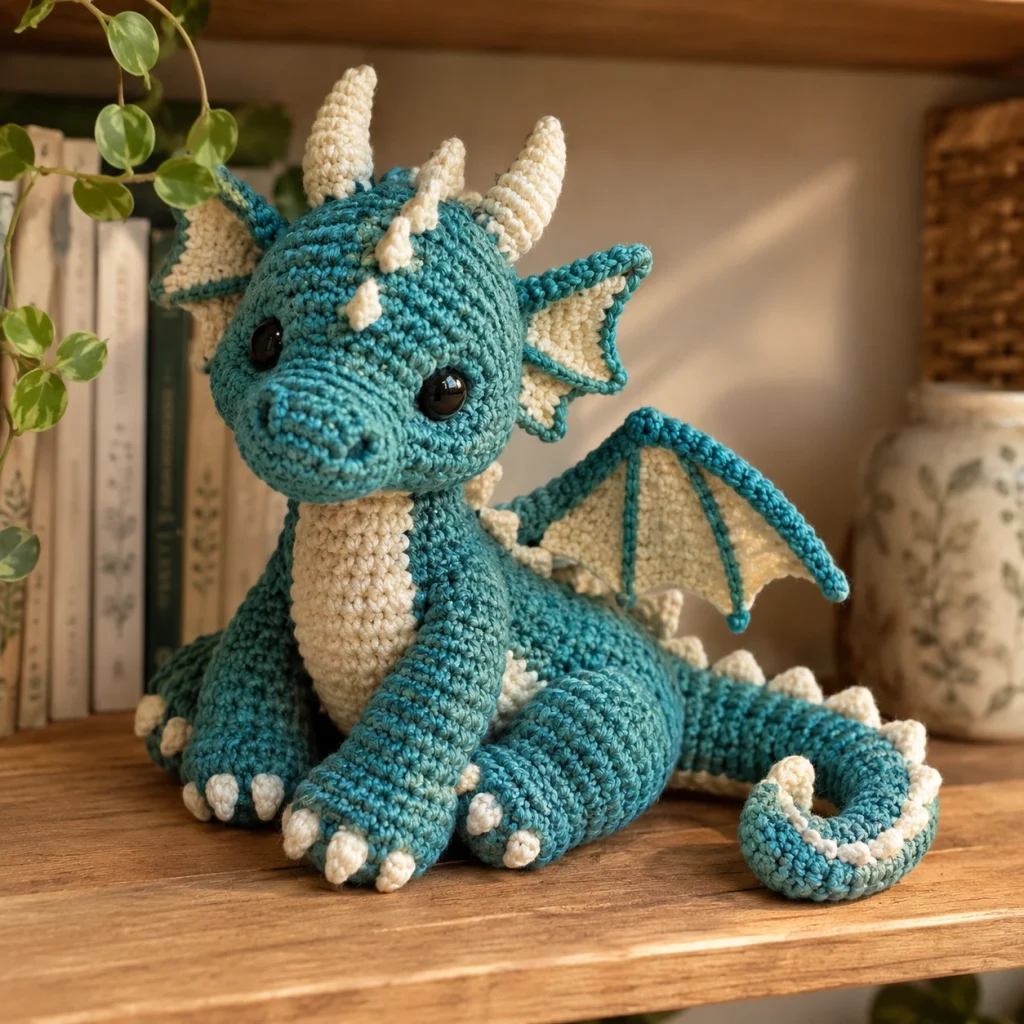
Original character amigurumi — dragons, unicorns, robots, or whimsical original creatures — sit at the more advanced end of the spectrum. These often combine multiple techniques: color changes, appliqué pieces, and sometimes wire armatures for posability.
Popular options: dragons, unicorns, robots, original fantasy creatures
Skill level: Intermediate to advanced
Typical size: 8–14 inches
Time estimate: 8–15 hours
Because these designs are more complex, following a well-tested written pattern (rather than improvising) is especially worthwhile here — shaping heads, wings, and multi-color sections is much harder to eyeball than a simple round body.
Soft Rattles & Baby-Safe Toys
This category is built specifically with infants in mind — no small attachable parts, no plastic pieces, and stitching tight enough that stuffing (or a rattle insert) can’t work its way out.
Popular options: ring rattles, soft blocks, crinkle toys, ball rattles
Skill level: Beginner
Typical size: 3–6 inches
Time estimate: 2–3 hours
For true infant safety, use 100% cotton yarn (easier to sanitize and machine wash), embroider all facial features rather than attaching pieces, and consider a rattle insert or bell sewn deep inside multiple layers of stuffing so it can’t be reached.
Matching Your Skill Level to a Toy Style
If you’re not sure where to start, let your current comfort with amigurumi guide the choice rather than which style you love most visually.
- Never made a toy before: Start with a mini keychain piece or a simple cactus — small scale means mistakes are quick to redo, and there’s no shaping around limbs yet.
- Comfortable with single crochet in the round: Move up to a classic animal amigurumi with basic limb attachment.
- Ready for a challenge: Character amigurumi with color work, wire supports, or multi-piece assembly will use everything you’ve learned so far.
- Making for a baby: Stick to soft rattles and baby-safe designs regardless of your skill level — safety construction matters more than stitch complexity here.
Caring for Handmade Crochet Toys
Most cotton or acrylic amigurumi can be surface-cleaned with a damp cloth; full machine washing is riskier since stuffing can clump or shift. If a toy does need a deeper clean, hand wash gently, reshape while damp, and air dry fully before returning it to a child to prevent mildew forming inside the stuffing.
Final Thoughts
Crochet toys are one of the most rewarding corners of the craft — small enough to finish in a weekend, personal enough to make a truly one-of-a-kind gift, and varied enough that you’ll never run out of new shapes to try. Start with a style that matches your current comfort level, and let your confidence (and toy collection) grow from there.